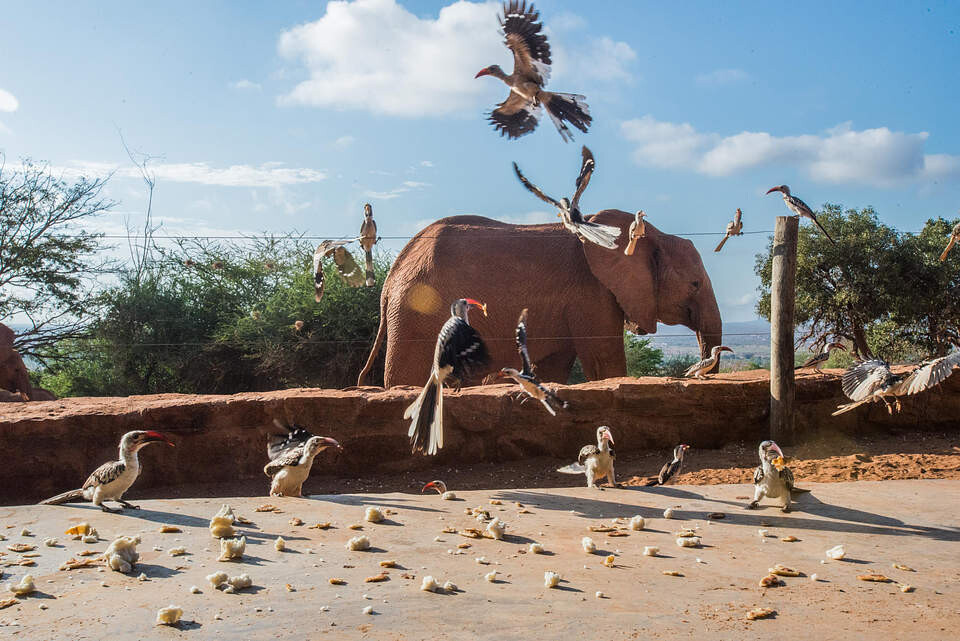
Voi Reintegration Unit
Proven, Life-Changing Wildlife Rehab Initiative
Nestled at the base of Msinga Hill, Tsavo East National Park hosts the Sheldrick Wildlife Trust-Voi Reintegration Unit which represents the heart of elephant conservation in Kenya.
For travellers on Kenya safaris seeking meaningful wildlife experiences beyond traditional game drives, the Voi Reintegration Unit provides an unparalleled window into elephant rehabilitation and conservation. Here, the past, present, and future of elephant conservation converge in one extraordinary location.
🔘 Enquire Now
📖 The Historical Significance of Voi
❤️ A Legacy Born from Love
The Voi Reintegration Unit holds a special place in conservation history. Seventy years ago, when David Sheldrick served as the founding warden of Tsavo East National Park, he and his wife Daphne raised their first orphaned elephants in this very location.
What began as a personal commitment to saving individual animals has evolved into the world’s most successful elephant reintegration program.
The stockades at Voi sit behind Daphne and David Sheldrick’s former home, making this the birthplace of the Orphans’ Project that has since saved over 244 orphaned elephants, with more than 130 successfully reintegrated back into the wild.
🏛️ The Birthplace of Elephant Rehabilitation
Dame Daphne Sheldrick pioneered the techniques that made successful hand-rearing of milk-dependent elephant orphans possible. Her groundbreaking work established the foundation upon which all modern elephant orphanages operate.
The Voi Reintegration Unit stands as a living testament to her vision, where each graduating elephant represents the continuation of her legacy.
🔄 Understanding the Reintegration Process
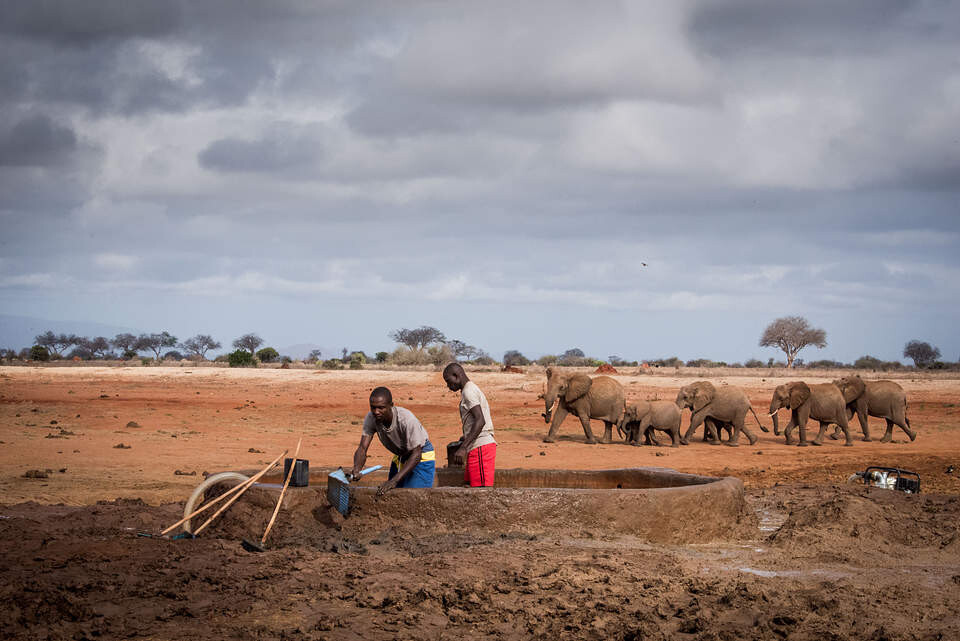
🚶 From Nursery to Wild: The Journey Explained
The reintegration process is a carefully orchestrated journey that can take up to ten years, varying significantly for each individual elephant based on the age at which they were orphaned and their ability to recall their elephant family.
The Voi Reintegration Unit serves as the critical middle phase in this journey.
Elephants typically arrive at Voi at around four years of age from the Nairobi Nursery. Here they join an established dependent herd under the watchful guidance of experienced keepers.
🐘 The Permeable Herd: A Unique Social Structure
What makes Voi extraordinary is its “permeable herd” structure. The dependent orphan herd mingles daily with ex-orphans who have already transitioned to wild life. These former orphans return voluntarily—sometimes after weeks or months away—to spend time with the keepers who raised them and to introduce their wild-born calves.
This dynamic social environment creates invaluable learning opportunities for younger elephants. A young orphan at Voi today might browse alongside a twenty-year-old ex-orphan tomorrow, absorbing knowledge about wild foods, social behaviors, and survival skills that no human keeper could teach.
🎓 The Graduation Milestone
The graduation of orphaned elephants to Voi is always an emotional milestone. Recent graduates like Sileita, Mushuru, and Sholumai made the journey from Nairobi in 2025, marking another chapter in their journey toward wild lives.
🌅 Daily Life at Voi Reintegration Unit
The daily rhythm at Voi follows a predictable pattern that balances nutrition, socialization, and skill development.
The orphaned elephants emerge from their stockades each morning, eagerly anticipating their first milk feed of the day. The younger residents sprint down the path toward waiting keepers, while older elephants take a more measured approach.
Throughout the day, the herd alternates between browsing excursions, mud baths, and social interactions.
🎾 Play and Development
Play forms a crucial part of daily life at Voi, helping young elephants develop the physical and social skills they will need in the wild.
Keepers’ diaries regularly document playful behaviors—elephants chasing each other around the compound, engaging in sparring matches, and forming friendships that provide emotional security.
🤝 The Keepers’ Role
The keepers at Voi represent the bridge between human care and wild independence. They provide the milk feeds that sustain growing elephants, monitor health, and offer the emotional security that young orphans need as they gradually venture further into the bush.
🐘 Exceptional Elephants and Their Stories
👑 Edie: The Matriarch of Voi
Edie represents the remarkable success of the Voi reintegration model. Rescued in 1999, she has become one of the unit’s most respected ex-orphans—a wild-living mother of five who roams with confidence and serves as a steadying presence for first-time mothers.
🎉 The Baby Boom: A Conservation Success Story
The Voi ecosystem is currently experiencing an extraordinary baby boom, with ex-orphans welcoming multiple wild-born calves.
In a remarkable development, Laikipia—an orphan raised at Voi—mated with fellow orphan Sagala, and twenty-two months later, their daughter Sia was born. This makes Laikipia a father and Sagala a first-time mother, demonstrating the complete cycle of successful reintegration.
To date, more than 92 wild-born calves have been born to elephants raised by Sheldrick Wildlife Trust keepers.
🎓 Recent Graduates
The class of 2025—Sileita, Mushuru, and Sholumai—brought their own unique personalities to Voi. Mushuru made headlines immediately upon arrival by diving headfirst into the water trough.
🛡️ Conservation Impact and Anti-Poaching Efforts
🌍 Protecting the Future
The Voi Reintegration Unit operates within the Greater Tsavo Conservation Area, which spans over 64,000 square kilometers.
The Trust’s commitment to conservation extends well beyond the stockades, with eleven anti-poaching teams operating within the Tsavo Conservation Area in conjunction with the Kenya Wildlife Service.
🩺 Mobile Veterinary Support
The Sheldrick Wildlife Trust also operates mobile veterinary units that provide crucial medical support for wild elephants in the region.
👀 Planning Your Visit?
🎟️ How to Visit the Voi Reintegration Unit
Unlike the Nairobi Nursery, the Voi Reintegration Unit operates with more restricted access. Visits can only be arranged by advance booking of either Galdessa Camp or Little Galdessa Camp (both available on an exclusive self-catering basis per group or family).
⚠️ Essential Requirement: Guests must adopt an elephant through the Sheldrick Wildlife Trust’s foster program to visit Voi. Foster parents need to obtain a permission letter from the SWT Nairobi office approximately three weeks before their intended arrival.
🌅 The Evening Visit Experience
The most intimate way to experience Voi is through an exclusive evening visit, available from 5 to 6 PM when the elephants return to the stockades for their evening milk and to spend the night.
This limited-access experience provides a more private encounter with the orphans and their keepers.
👀 What to Expect
As the elephants return from their daytime adventures, they receive their evening bottles before settling into their stockades for the night. The busy 10–15 minute feeding period gives way to quieter moments observing the elephants munching on branches as they prepare for sleep.
🌍 Conservation Tourism: Beyond the Safari
❤️ A Deeper Connection
For safari travellers accustomed to viewing wildlife from a distance, the Voi Reintegration Unit offers something fundamentally different—a chance to understand the individual stories behind elephant conservation.
🦁 The Broader Tsavo Experience
A visit to Voi can be seamlessly integrated into a broader Tsavo safari experience. The unit’s location within Tsavo East National Park means visitors can combine their time at the stockades with traditional game drives.
🤝 Supporting Conservation
By visiting and fostering elephants through the Sheldrick Wildlife Trust, travellers directly contribute to conservation efforts. The adoption fees support not only the care of individual elephants but also the broader anti-poaching and veterinary programs.
🏆 The Future of Elephant Conservation
The Voi Reintegration Unit represents a model for elephant conservation that has been replicated across Africa and beyond. The combination of intensive early care, gradual reintegration, and ongoing support for wild-living graduates has proven remarkably successful.
As Kenya’s elephant population faces habitat loss and human-wildlife conflict, the work of the Sheldrick Wildlife Trust-Voi Reintegration Unit grows increasingly vital.
🏁 Conclusion: Witnessing Conservation in Action
The Sheldrick Wildlife Trust’s Voi Reintegration Unit offers Kenya safari travellers an extraordinary opportunity to witness elephant conservation at its most meaningful.
For those who have fostered elephants through the Trust’s program, a visit to Voi provides the profound experience of seeing their adopted orphan thriving among its peers.
A visit to Voi isn’t simply an addition to a Kenya safari itinerary; it’s a transformative experience that connects travellers to the remarkable story of elephant resilience.
🏕️ Stay Near the Voi Reintegration Unit
The closest accommodation is provided by the Sheldrick Wildlife Trust’s Eco Lodges:
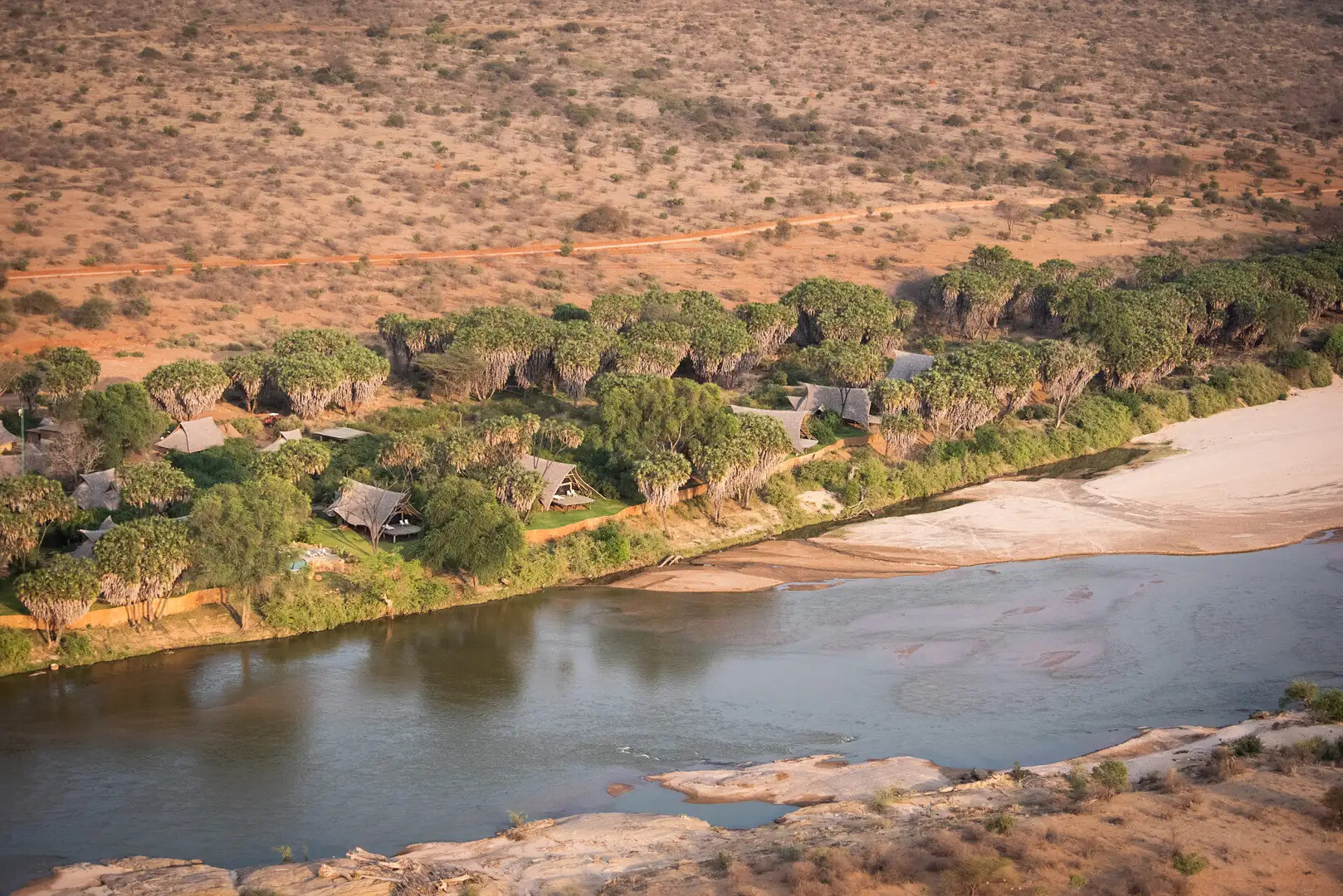
- 🏕️ Galdessa Camp
- 🏕️ Galdessa Little
Both properties offer exceptional wildlife viewing along the Galana River and convenient access to the Reintegration Unit. Like all Sheldrick Wildlife Trust Eco Lodges, they operate on a fully staffed self-catering basis.
🛒 Beyond Kenya Safaris Menu Planning Service
At Beyond Kenya Safaris, we make your stay effortless.
Before your safari, we liaise directly with the lodge chef to prepare:
- 📋 Personalized menus.
- 🛒 Detailed shopping lists.
- 🥗 Dietary requirement planning.
- 👨👩👧 Children’s meals.
- 🎉 Celebration menus.
On your arrival in Nairobi, we accompany you to carefully selected supermarkets and assist with purchasing everything needed for your stay.
❓ Frequently Asked Questions
🐘 What is the Voi Reintegration Unit?
It is the Sheldrick Wildlife Trust’s original elephant reintegration centre, where orphaned elephants continue their rehabilitation before returning to life in the wild.
📍 Where is it located?
The Unit is located within Tsavo East National Park, one of Kenya’s largest protected wildlife areas.
🎟️ Can visitors access the Unit?
Visits are generally available to guests staying at nearby Sheldrick Wildlife Trust Eco Lodges, subject to the Trust’s current access policies.
🌍 Do elephants eventually become wild?
Yes. The program encourages complete independence, allowing elephants to choose when they are ready to leave. Many later return voluntarily with their own calves.
🏕️ Which lodges are closest?
Galdessa Camp and Galdessa Little are the nearest Sheldrick Wildlife Trust Eco Lodges and provide the best access to the Voi Reintegration Unit.
📞 Plan Your Voi Reintegration Unit Safari
Beyond Kenya Safaris specializes in tailor-made conservation safaris that connect travellers with Kenya’s most inspiring wildlife experiences.
We arrange stays at Galdessa Camp and Galdessa Little, organize road and air transfers, assist with personalized menu planning and grocery shopping in Nairobi, and create bespoke itineraries combining the Nairobi Elephant Nursery, Voi Reintegration Unit, Ithumba Reintegration Unit, Umani Springs Reintegration Unit, Tsavo East, Amboseli, Samburu, Laikipia, and the Maasai Mara.
📞 +254 785 639 497 | ✉️ sales@beyondkenyasafaris.com
🔘 Enquire Now
🔗 A Guide to Sheldrick Wildlife Trust Kenya
- 🏢 Sheldrick Wildlife Trust Kenya
- 🐘 Nairobi Elephant Nursery
- 🐘 Ithumba Reintegration Unit
- 🐘 Umani Springs Reintegration Unit
- 🏕️ Galdessa Camp
- 🏕️ Galdessa Little
- 🦁 Tsavo East National Park
- 🌿 Elephant Conservation in Kenya
- 🦁 Luxury Kenya Safaris
- 🌍 Conservation Safaris in Kenya