Best Places to Visit
Amboseli National Park
The Land of Giants and the Snows of Kilimanjaro
Nestled in the shadow of Africa’s tallest mountain, Amboseli National Park remains one of Kenya’s most iconic wildlife destinations. The rhythm of nature and grandeur of elephants blend with Maasai culture into a living story of conservation and beauty.
Despite its dry and dusty facade, Amboseli National Park is a thriving ecosystem. The water travels underground from Kilimanjaro’s melting ice cap. It moves through volcanic rock and surfaces as springs in the wetlands.
These springs form lush swamps that support a rich tapestry of life. From a distance, the scene appears arid, but up close, it teems with life.
🔘 Enquire Now
🐘 Amboseli’s Wildlife – Elephants, Predators & the Big Five
Amboseli sits on the border of Kenya and Tanzania, making it famous for being the best place in Africa to get close to free-ranging elephants. The open plains teem with zebra, wildebeest, giraffe, gazelle, and buffalo, and where there is plains game, there are predators.
🐘 The Elephants of Amboseli
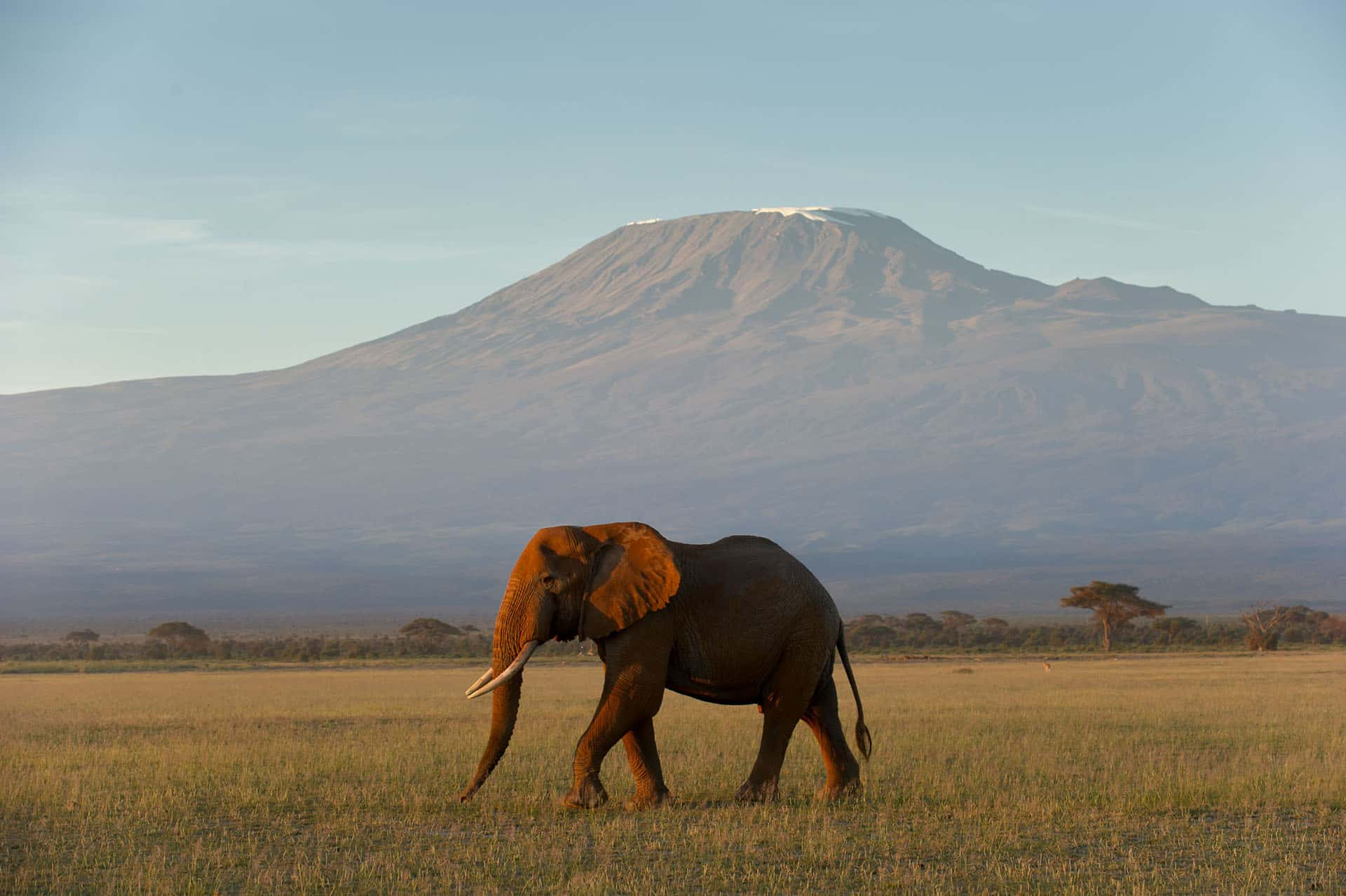
- Large Herds: Home to large herds of African elephants, often seen roaming freely across the grasslands, back-dropped by the snow-capped peaks of Kilimanjaro.
- Super-Tuskers: Globally recognized for housing some of the last great “super-tuskers” left in Africa—bulls with ivory to the ground. These magnificent elephants are among the most studied in the world.
- “Red Elephants”: The park’s elephants are often called “red elephants” because they dust-bathe in the park’s rich iron-oxide soil. The fine volcanic earth coats their thick gray skin in a reddish hue, creating striking photographic moments.
- Conservation: As of 2026, around nine Super Tuskers remain in Amboseli, supported by responsible safari conservation efforts.
🦁 Predators and Plains Game
- 🦁 Lions — Frequently seen hunting across the open plains.
- 🐆 Cheetahs — The open grasslands are prime hunting ground for these swift cats.
- 🐆 Leopards — Often spotted in acacia woodlands and around the swamps.
- 🐕 Spotted Hyenas — Patrol at dawn and dusk.
- 🦓 Plains Game — Includes zebra, wildebeest, giraffe, buffalo, hippo, gazelle, and impala.
🦜 Birdlife in Amboseli
Bird enthusiasts will find Amboseli a paradise, with hundreds of species including:
- 🦩 Pelicans and flamingos around Lake Amboseli.
- 🦢 Crowned cranes and storks in the wetlands.
- 🦅 Secretary birds and other raptors across the plains.
📸 The Magic of Mount Kilimanjaro
On clear mornings, Kilimanjaro’s snow-covered summit glows against a blue sky, creating one of the most breathtaking scenes in all of Africa. For wildlife photographers, it is an unmatched setting.
Kilimanjaro usually hides in cloud by mid-morning. The best time for clear views is first light (dawn) and dusk, when the golden hour creates spectacular photographic opportunities.
📸 Tip for the perfect photograph: Pack both a telephoto lens for close-ups of wildlife and a wide-angle lens to capture elephants against the mountain backdrop.
📅 When to Visit Amboseli – Seasonal Guide
Amboseli is a year-round destination, but the season strongly affects both game viewing and your chances of a clear Kilimanjaro view.
🌦️ Seasonal Breakdown
- 🟡 Peak Dry Season (Jun–Oct) — Clear mountain views, wildlife concentrated at swamps, peak tourism, dusty golden plains.
- 🟢 Short Dry Spell (Jan–Feb) — Warm, clear, excellent for mountain and game viewing, between two rainy spells.
- 🟢 Green Season (Nov–Dec) — Short rains, lush scenery, newborn animals, fewer vehicles, good value, mountain often cloudy.
- 🌿 Long Rains (Mar–May) — Wettest months, dramatic skies, lowest prices, very quiet, wildlife remains around swamps.
📝 Note for travelers: During the peak season, we always have challenges with accommodation availability, which is why we recommend booking early.
🎯 What to See and Do in Amboseli
Amboseli is compact enough to explore thoroughly in a couple of days, with distinct habitats packed into a small area.
- 🚙 Game Drives — Morning and afternoon game drives in open-sided 4×4 safari vehicles with expert guides.
- Specialized options include Sunrise drives, Sundowner drives, and Night drives on private conservancies.
- 🌿 The Swamps and Plains — The spring-fed Enkongo Narok and Olokenya swamps are the green heart of the park.
- 🏔️ Observation Hill — A pyramid-shaped hill offering a panoramic view over the swamps, the plains, and Kilimanjaro.
- 🎭 Maasai Cultural Experiences — Visit a nearby village or walk with a Maasai guide on a community conservancy. Expect dancing, beadwork, and a visit to a traditional manyatta.
- 📸 Photography Safaris — Amboseli is a photographer’s dream. Bring telephoto and wide-angle lenses, and dust covers for your gear.
✈️ How to Get to Amboseli National Park
- ✈️ By Air (Recommended) — Daily light-aircraft flights from Nairobi’s Wilson Airport take approximately 45 minutes. This saves 4–5 hours of driving time.
- 🚙 By Road — Distance: 240 km from Nairobi. Travel Time: 4–5 hours via Namanga or Emali.
🔗 Combining with Other Destinations
Amboseli pairs beautifully with:
- 🦁 Maasai Mara – For big cats and the Great Migration.
- 🐘 Tsavo East & Tsavo West – For a wilder experience with red elephants.
- 🏖️ The Kenyan Coast – For a beach finale on the Indian Ocean.
🏕️ Where to Stay in Amboseli – Lodges & Camps
- 🏨 Classic and Comfortable Lodges — Well-run lodges within the park offer reliable comfort and superb mountain views. Options include: AA Lodge Amboseli, Amboseli Serena Safari Lodge.
- ⛺ Premium Camps and Conservancies — On private conservancies, intimate tented camps offer fewer vehicles, walking safaris, and night drives. Options include: Amboseli Porini Camp, Satao Elerai Camp.
- 👑 Luxury Lodges — Beautifully designed lodges with private verandas framing Kilimanjaro and gourmet dining. Top-tier option: Tortilis Camp,Kitirua Plains Lodge and Angama Amboseli
🗺️ Amboseli Safari Itineraries
Itieneraries
🏕️ Classic 3-Night Amboseli Safari
- Day 1: Fly or drive from Nairobi to Amboseli. Afternoon game drive among the elephant herds.
- Day 2: Sunrise drive for Kilimanjaro views, exploring the swamps and plains, with a climb up Observation Hill.
- Day 3: Morning with the elephants and a Maasai cultural visit; afternoon at leisure.
- Day 4: Final dawn drive and return to Nairobi, or fly onward to the Masai Mara.
🦏 6-Day Amboseli & Ol Pejeta Safari
- Day 1: Drive Nairobi to Amboseli, afternoon game drive, Maasai village visit, night drive.
- Day 2: Full day game viewing in Amboseli National Park.
- Day 3: Fly from Amboseli to Ol Pejeta Conservancy.
- Day 4: Explore Ol Pejeta’s rhino population and chimpanzee sanctuary.
- Day 5: Morning activity, fly back to Nairobi.
💰 How Much Does an Amboseli Safari Cost?
Costs depend on the season, lodge tier, and whether you fly in.
- 💵 Budget/Value — $150–$300 per person per day.
- Includes: Accommodation, meals, game drives, basic guiding.
- 💵 Comfortable/Premium — $400–$850 per person per day.
- Includes: All-inclusive with game drives, meals, park fees.
- 💵 Luxury — $1,000–$3,000+ per person per day.
- Includes: All-inclusive with premium guiding, gourmet dining, exclusive experiences.
Additional costs: Park entry fees ($90 pp/pd), Maasai village visit (~$30 pp), flights, tips.
💡 Essential Tips for Your Amboseli Safari
- 🎒 Packing Essentials — Neutral-colored lightweight clothing, hat, sunscreen, insect repellent, binoculars, camera, warm jacket for mornings, and comfortable shoes.
- 🩺 Health and Safety — Amboseli is a malaria area. Speak to a travel clinic about prophylactics and bring repellent.
- 🛂 Visa Requirements — Kenya uses an eVisa system. Apply online before arrival.
- 📸 Photography Tips — Chase the mountain at dawn, shoot at golden hour, and be patient.
- 🌿 Responsible Travel — Support community-run experiences, respect wildlife, and leave no trace.
🏆 Why Choose Beyond Kenya Safaris
As a Kenya-based safari operator with deep expertise in East Africa, Beyond Kenya Safaris designs tailor-made safari experiences across iconic wildlife destinations.
- 🧭 Expert Local Knowledge — Our professional driver guides have firsthand knowledge of Amboseli’s wildlife, best viewing spots, and cultural experiences.
- 🗺️ Custom Itineraries — Every safari is customized with expert local guides, comfortable 4×4 safari vehicles, and carefully selected lodges.
- 🤝 Trusted Accommodation Partners — We hand-pick camps and lodges based on quality, location, and value.
- ✈️ Seamless Logistics — We handle all arrangements: lodge reservations, safari logistics, airport transfers, and on-the-ground support.
- 🌿 Responsible Travel — We support community-based conservation and Maasai cultural experiences.
❓ Amboseli Safari FAQs
🛡️ Is Amboseli National Park safe for tourists?
Yes. Kenya is generally safe for tourists, especially within national parks and reserves. We work only with trusted guides and lodges.
🦁 What wildlife can I expect to see in Amboseli?
Amboseli offers excellent sightings of large elephant herds (including super tuskers), lions, cheetahs, leopards, buffalo, zebra, wildebeest, giraffe, hippo, and hundreds of bird species.
🌙 How many days should I spend in Amboseli?
Most visitors spend 2–3 nights in Amboseli, which allows for a comprehensive experience.
🔗 Can I combine Amboseli with other parks?
Yes. Amboseli pairs beautifully with the Maasai Mara, Tsavo East/West, or with the Kenyan coast.
🐘 What is the best time of year to see the elephants?
Elephants are resident in Amboseli year-round. However, the dry season (June–October) sees them concentrated around the swamps, making viewing easier.
🛂 Do I need a visa for Kenya?
Yes. Kenya uses an eVisa system, which you apply for online before arrival.
📞 Discover Masai Mara National Reserve
Ready to experience the magic of Amboseli? Contact Beyond Kenya Safaris today to start planning your tailor-made safari.
📞 +254 785 639 497 | ✉️ sales@beyondkenyasafaris.com
🔘 Enquire Now